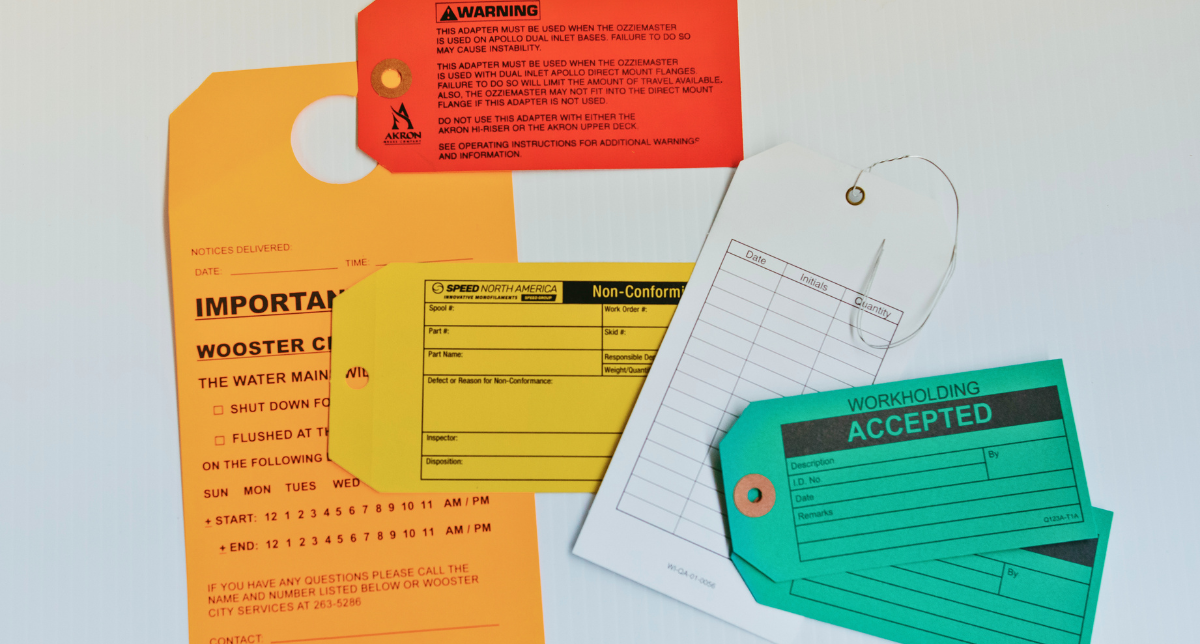
A printed tag may seem like a simple piece, but in a manufacturing or processing environment, it can play an important role in keeping work moving. Custom manufacturing tags can travel with a part, material, piece of equipment, or work order and give employees an easy way to see important information throughout the production process.
At Wooster Color Point, we print tags around the way a business actually works, whether they are being used for inspections, quality control, production status, maintenance, or another internal process.
What Are Manufacturing Tags?
Manufacturing tags are printed tags used to identify and communicate information as materials, products, or equipment move through a process.
Depending on the operation, a tag may include:
Work order or part numbers
Inspection status
Quantity
Dates and employee initials
Quality-control information
Maintenance or service details
Instructions for the next step
Accepted, rejected, or non-conforming status
The goal is to keep the information employees need connected to the item itself. For example, a non-conforming tag can identify a part that needs additional review before it continues through production. An accepted tag can show that an inspection or quality-control step has already been completed.
Instead of relying on someone to remember the status or locate the information somewhere else, the tag helps make it visible.
Manufacturing Tags vs. Production Labels
You may also see similar materials referred to as production labels, manufacturing labels, inspection tags, or quality-control tags. They often serve the same basic purpose in helping to communicate what something is, where it is in a process, or what needs to happen next.
The difference is often how the piece is used. A production label may be adhesive and applied directly to a product, container, or material. A manufacturing hang tag is usually attached through a hole using wire, string, or another method, allowing it to travel with the item without being permanently applied.
Why Use Custom Tags For Your Process?
A generic tag works when the information being recorded is simple. For more involved operations, the tag should match the process employees are already following.
That may mean including fields for:
Work order number
Part number
Quantity
Inspector initials
Date
Department
Disposition
Reason for non-conformance
Next steps
Customizing the tag design can also help streamline processing. If an employee needs to identify the status of an item quickly, the most important information should be easy to find. Different colors can also help distinguish one status, department, or process from another. The tag should support the workflow, not create another step employees have to work around.
Choosing the Right Material and Finishing for Manufacturing Tags
How a manufacturing tag will be used helps determine how it should be produced.
A tag attached to equipment may need a heavier stock or reinforced hole, while a tag traveling with a batch of parts may need space for handwritten notes, inspection details, or production status updates.
When planning custom manufacturing tags, we look at details like:
Tag size and shape
Paper or synthetic stock
Hole placement and reinforcement
Color coding
Sequential numbering
Perforation
Die cutting
How the tag will be attached
Whether employees need to write on the tag
These production choices help make sure the finished tag works within the environment where it will actually be used. For tags that require a custom shape, our guide to die cutting in printing explains how printed pieces can be cut to specific dimensions and shapes after printing.
The printing method may also vary depending on quantity, color requirements, stock, and other project specifications. Our guide to digital vs. offset printing explains some of the factors we consider when determining the best production method for a print project.
Using Custom Manufacturing Tags for Quality Control
Custom manufacturing tags can also help create consistency across inspection and quality-control processes. An inspection tag can provide the same fields for every employee to complete, including part number, date, inspector initials, quantity, and status. A non-conforming tag can clearly identify why a part has been held and what needs to happen before it moves forward.
Using a consistent format helps employees quickly recognize the type of tag and the information they need to review. For manufacturers with multiple departments, shifts, or production steps, these tags can become a simple way to keep information connected to the product as it moves through the facility.
Other Uses for Custom Printed Hang Tags
Wooster Color Point can also produce custom printed tags for equipment, products, retail items, clothing, events, and other business uses.
For retail and product applications, hang tags can carry pricing, care information, product details, instructions, or branding. They can also become part of a larger custom packaging system, working alongside printed boxes, cartons, sleeves, product wraps, or displays to create a more consistent presentation.
A hang tag may be a small piece of the overall package, but it gives businesses another place to reinforce brand colors, messaging, product information, and the details a customer needs before making a purchase.
For products that need a more complete presentation, our Custom Packaging: Get Your Product Seen guide looks at how custom boxes, die cuts, hang tags, displays, and other printed elements can work together as part of the customer experience.
Custom Manufacturing Tag Printing in Wooster, Ohio
If you need custom manufacturing tags, inspection tags, quality-control tags, or production tags, Heather Henthrone, Owner of Wooster Color Point, can help you think through the details that will make the tag work best for your process.
That may include recommendations on size, stock, color, numbering, hole placement, die cutting, perforation, or other finishing options based on how the tag will be used.
Contact Wooster Color Point to talk with Heather about custom manufacturing tags for your production, inspection, or quality-control process.
